
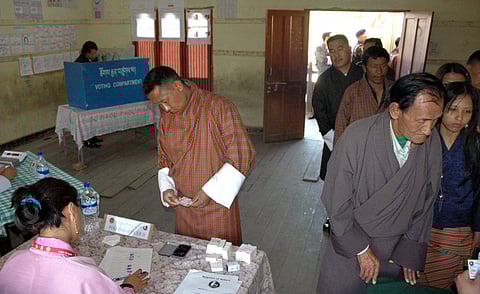
A constitutional order in Thimpu
For a country emerging from protectorate status during colonial times, and struggling to emerge from under the shadow of India in the modern era, what Bhutan had lacked was a constitution that set its polity under the rule of law, rather than the benevolence of its ruler. While the current Druk gyalpo, King Jigme Singye Wangchuk, is widely acknowledged as a modernizing force, the lack of codification of the very institution of state has always made Bhutan vulnerable to the vagaries of internal and external evolution.
The release of a draft constitution on 26 March 2005 therefore marks an important political milestone. The document, prepared by a 39-member committee over the past three years, is to be discussed in the Tshongdu (National Assembly), in local bodies, and among common citizens, before being put up for approval in a referendum. The concise constitution envisages a "democratic constitutional monarchy" in Bhutan. Declaring Bhutan to be a sovereign kingdom with sovereign power vested in the people, the draft delineates the role of monarchy, stipulates fundamental rights and duties, provides for a two-party parliamentary system and outlines provisions concerning citizenship.