
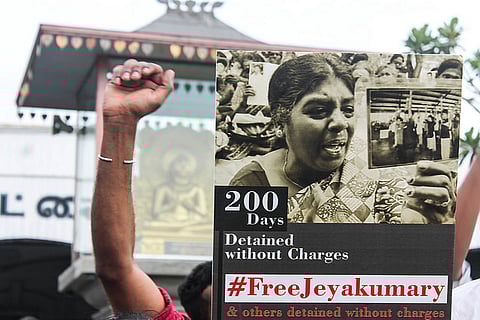
The case against anti-terrorism laws
Nearly a decade after the end of the civil war, Sri Lanka's draconian anti-terrorism laws – which give sweeping powers to policing authorities and allow arbitrary detention of suspects – are still in the books. A government pledge to repeal and replace the existing Prevention of Terrorism Act (PTA) has seen slow progress. Last year, the cabinet approved a pre-bill draft for the proposed Counter Terrorism Act (CTA), which came under criticism from legal experts and the civil society for retaining objectionable aspects of older counterterrorism laws. The bill has yet to be tabled in the Parliament.
In this interview, human-rights lawyer and researcher Gehan Gunatilleke talks to us about the problems with Sri Lanka's proposed anti-terrorism laws, how it falls short of the government's own commitments, and argues that any special legislation targeting 'terrorism' is fundamentally flawed and unnecessary.
Himal Southasian: Could you briefly describe the proposed Counter Terrorism Act (CTA), the current state of the bill and how is it different from the Prevention of Terrorism Act (1978) it was intended to replace?
Gehan Gunatilleke: The cabinet approved 'Policy and Legal Framework relating to the Proposed Counter Terrorism Act of Sri Lanka' in April 2017. At that stage, there was no bill as such, as the Legal Draftsman's Department had not converted the document into a bill. The document has since been converted into a bill, but it is not in the public domain. So I can only comment on the cabinet-approved document of 2017.