
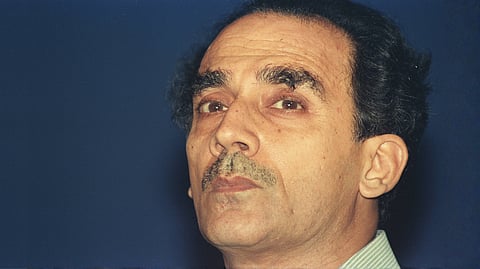
Arun Shourie’s services as prophet of Modi’s India
THE EMERGENCY of 1975 was the point of no return for Indian democracy. The story of the next five decades is, essentially, a story of the decline of liberal politics. India’s elite and middle classes abandoned the vision of the country’s founding fathers. The Emergency freed them up to disparage the pursuit of egalitarianism and sneer at the idea of shielding Muslims from the worst impulses of Hindu majoritarianism. But Indira Gandhi’s authoritarian interlude also jolted the oppressed masses into defiance and political autonomy. They gradually withdrew from the Congress party’s paternalistic hand and began to assert themselves in ways that shocked their former masters. For better and for worse, the nature of Indian democracy changed: the body politic, scarred and energised in equal measure, searched for new forms of life.
What began with Indira has culminated in the Hindu majoritarian regime of Narendra Modi. Years after she resigned as the British prime minister, the conservative icon Margaret Thatcher said she considered her greatest achievement to be Tony Blair, who transformed the left-wing Labour Party into a neoliberal force. With only some exaggeration, it could be said that Indira’s is Modi – the Congress’s nemesis, yet one who inherited her politics of authoritarian nationalism and forged it into a brutal instrument of Hindu supremacy. This illegitimate, if partial, political genealogy is buried in the unconscious of the Indian political class, desperately repressed both by Indira’s successors and Modi’s supporters. Among those who drew the crooked line between the two, Arun Shourie’s handiwork is distinctive.