
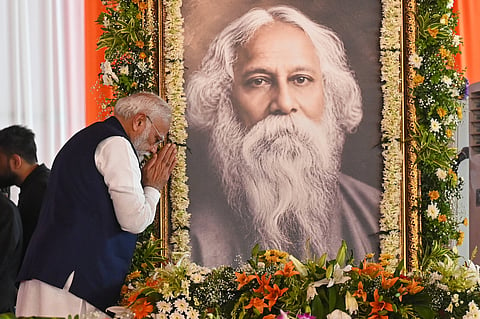
The BJP’s victory in West Bengal belies Bengali exceptionalism and bhadralok liberalism
THERE WAS A particular kind of grief performed by English-speaking Bengali liberals on social media in the aftermath of the recent West Bengal election results, which delivered victory to the Bharatiya Janata Party (BJP)and, with it, the first right-wing government in the Indian state’s history. It is an anguished, almost theatrical mourning, the kind that arrives wrapped in quotes from Rabindranath Tagore and accompanied by questions like: How could this happen here, of all places? The implication is clear: Bengal is different. Bengal is cultured. Bengal produced the Bengal Renaissance. Bengal has always been, at its civilisational core, secular and humane.
This grief is worth taking seriously not because the underlying narrative is correct but because it is revealing. It tells us less about what West Bengal has become and far more about a self-image that has never been adequately interrogated. To understand the current political moment, one must first understand the mirror the bhadralok – Bengal’s “gentlefolk” elite – has been holding up to itself for nearly two centuries, and the face it has consistently refused to see staring back.