
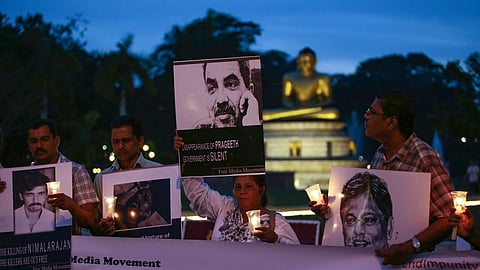
The battle for justice for the disappeared Sri Lankan journalist Prageeth Ekneligoda
This story is published in collaboration with the Free Media Movement of Sri Lanka, part of a series for Black January, which commemorates crimes against Sri Lanka's journalists. It has been translated and edited from Sinhala, with updates on Prageeth Ekneligoda’s case.
On 5 February, the activist Sandya Ekneligoda called on Sri Lanka’s president, Anura Kumara Dissanayake, to ensure her safety after receiving a death threat via phone call from a person who described himself as a “retired army brigadier”. The caller asked her to remain quiet or else she would suffer the same fate as her husband, the journalist and cartoonist Prageeth Ekneligoda, who disappeared on 24 January 2010.
Sandya is not an activist by choice. She has become a familiar figure at protests and public events largely due to her indefatigable fight for justice and accountability for her husband’s disappearance. Over the years, she has turned to creative forms of protest, ranging from handing out appeals at the Galle Literary Festival to reciting Sinhala folk poetry in front of the Presidential Secretariat, to ensure sustained media attention on Prageeth’s case. This year, as she has before, Sandya invited supporters to join her in making offerings at the Maha Kali Amman Temple on the outskirts of Colombo, invoking Kali and calling on the Hindu deity to punish those responsible for Prageeth’s disappearance. For years now, she has shaved her head as part of this ritual, vowing to grow her hair out again only once she has received justice. Her two sons remain deeply impacted by their father’s disappearance, and have also received death threats for drawing attention to the case.
The Ekneligoda home is filled with memories and photographs of Prageeth. “I still live for Prageeth,” Sandya said. But, she added, many people have forgotten him. Sixteen years have passed since his disappearance.
A criminal case regarding the disappearance has been brought before a three-judge panel at the Colombo High Court, but in recent times it has been continually postponed due to the failure to appoint a third judge to the bench. On 2 February, the case was postponed yet again, until May. Even more damning, in January the military intelligence officer Thelge Erantha Radeesh Peiris, a key suspect in Prageeth’s case, was promoted to the rank of bBrigadier, despite opposition from Sandya and other activists. These incidents are typical of the delays and obfuscations that have impeded justice in Prageeth’s case.
