

IN ANURADHA ROY’S novel The Folded Earth, a young woman leaves her home in Hyderabad and moves to Ranikhet, a hill town in the northern Indian state of Uttarakhand, in the wake of a tragedy. For the urbanite, life in the Himalayan town is difficult to navigate at first, but over time she falls into harmony with mountain life and the place’s human and non-human inhabitants.
“Though I cannot know precisely when it happened, a time had come when I became a hill-person who was only at peace where the earth rose and fell in waves like the sea,” Maya, the novel’s protagonist, says.
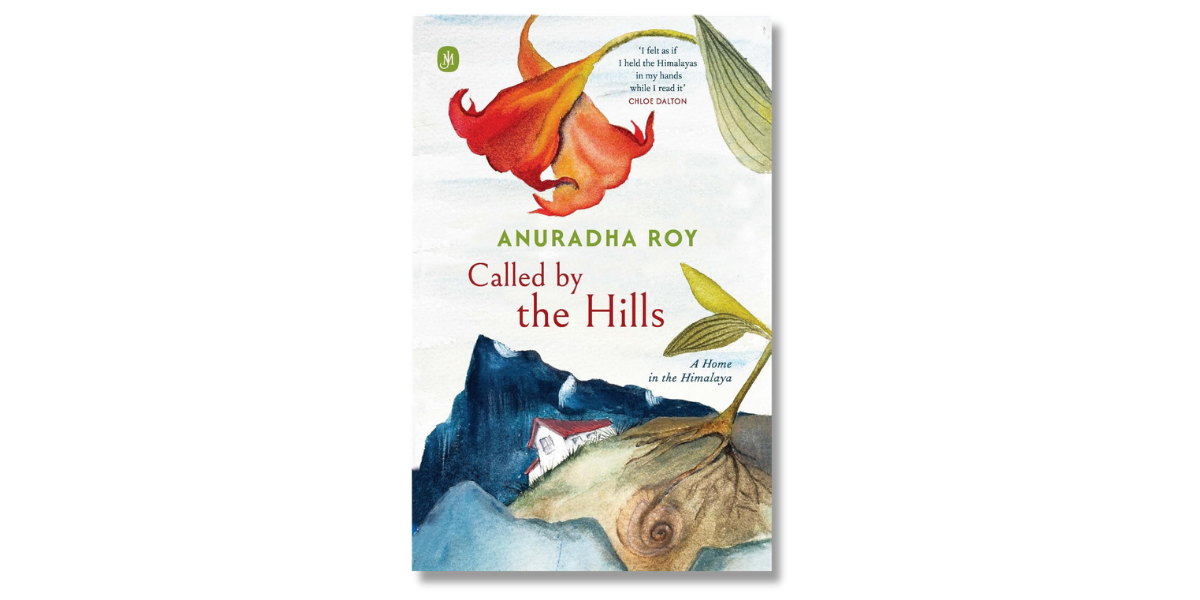
Roy, in her own non-fictional life, took up residence in Ranikhet more than 25 years ago. Her latest book, Called by the Hills, offers glimpses of this life without fixing a single moment when she, like Maya, became a hill-person. Instead, bit by bit, season by season, we watch her make a home there, growing restless anywhere but in the rugged heights of her small town.
This is Roy’s first memoir, and in it her own existence in the mountains seems incidental; she uses the book as a means primarily to tell stories about the flora and fauna that surround her. It is not a conventional nature memoir about escaping modern life for the wilderness. Roy’s attachment to the Himalaya emerges from entanglement and coexistence – with people, animals, forests, labour and violence. She cautions against separating the beauty of the place from its ecological precarity, caused largely by human forces. By the powerful act of observation, she highlights the dangers of “turning magnificent natural landscapes into rickety urban messes.”
Roy offers a precise point when she and Rukun Advani, her husband and fellow publisher – whom she calls R in the book – decided to leave behind the “neon-lit offices in the slick and shiny publishing house” in Delhi where they worked – along with their “computers, printers, telephones and coffee machines” – and move to the hills.
They had made several trips to Ranikhet before then but had never seen the snowy peaks for which the town is known. That changed on one visit during the monsoon, when they “awoke to long ribbons of sunlight streaming in through the trees in the east.” They charged out of their accommodation and ran down muddy slopes through clusters of trees, leeches attaching to their legs, to get a clearer view of the peaks that had just caught the first rays of the sun.