

LIKE TRANSLATIONS of classical literature, histories are enriched by multiple tellings. Differing perspectives and ideologies that might oppose traditional historical narratives do not erase or replace them; they supplement them. As we translate anew to account for how linguistic idioms change and to adjust to more equitable ways of seeing and thinking, so too do we re-tell histories to include more rather than less of humankind – an impulse that has shaped many postcolonial historiographies, such as the Marxist and Subaltern schools of thought.
Our knowledge of the past may not change much in terms of the information we already have, but we can be open to new ways of thinking and writing about that knowledge. New technologies and new research could also challenge our previously held beliefs. Therefore, it is all the more important to rest our revised perspectives on historical evidence and plausible theories that can be corroborated by other sources, instead of resorting to ideological positions that sanctify our preferences.
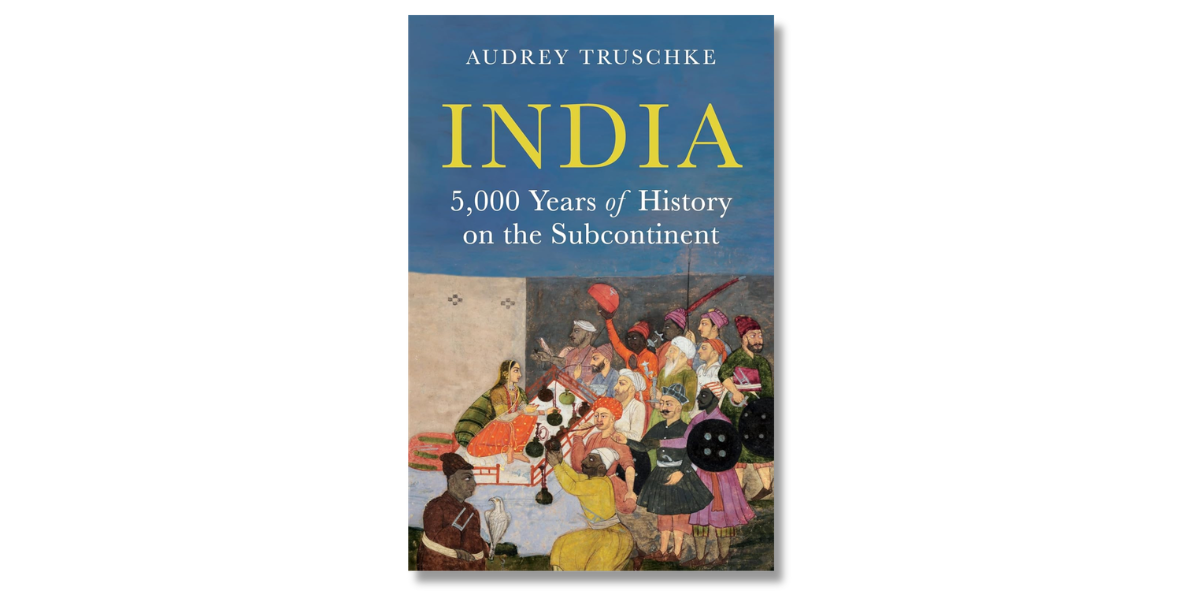
Few contemporary historians of Southasia embody the tensions around historical method and interpretation as visibly as Audrey Truschke, a professor of Southasian history at Rutgers University in the United States. Her new book, India: 5,000 Years of History in the Subcontinent, is thoroughly researched, clear in its language as well as its intent, and, as we have come to expect from Truschke’s work, bold in its opinions and assertions. Truschke’s previous work has focused primarily on the Mughal period, which stretched from roughly the early 16th century to the mid-19th century, with examination of the relations between communities – Muslims and Hindus in particular. Her eponymous book on Aurangzeb, published in 2017, makes the argument that the 17th-century Mughal emperor, portrayed in popular nationalist narratives as an archetypal anti-Hindu tyrant, was not systematically against Hindus. Truschke notes that his “sporadic” destruction of temples and reimposition of the jizya tax – historically levied on non-Muslim subjects in several Islamic states – were motivated less by religious zeal than by political and economic concerns.
Other historians and scholars of Southasia have praised Truschke’s research and historical method as well as the textual evidence she gathers from multiple Southasian languages. However, her work is harshly criticised by those devoted to a view of the past that emphasises conflict and long periods of Hindu oppression by Muslim rulers. In this book, too, many will find much to disagree with in Truschke’s reading of historical figures, communities, places, events, movements and texts. That cacophony of criticism, sometimes learned, sometimes ignorant, is bound to grow louder as the book gains more traction. Hindu nationalist ideologues and their cohort of revisionist historians are sure to sound the alarm against Truschke, attacking her scholarship but also portraying her as part of an international movement seeking to denigrate Hindus and Hindu culture. But Truschke is no stranger to broadsides: she has managed to take them in her stride as she continues to write and publish her counter-narratives of Indian history.