

RARELY HAS THE GAP between global crises and credible solutions felt so wide. In an international system increasingly shaped by raw power and a weakening commitment to multilateralism, it is becoming more difficult to imagine the United Nations as an effective and decisive diplomatic force. Yet in the 1960s and 1970s, the UN stood at the very centre of efforts to defuse the world’s most volatile conflicts, including the Cuban Missile Crisis, the Six-Day War in West Asia and the Vietnam War. The organisation was not yet fragmented across innumerable committees; in practice, much of its authority and moral weight resided in a single individual. For more than a decade, in a world then defined by the Cold War, that individual was neither American, European nor Soviet, but a former schoolteacher from a remote corner of Burma.
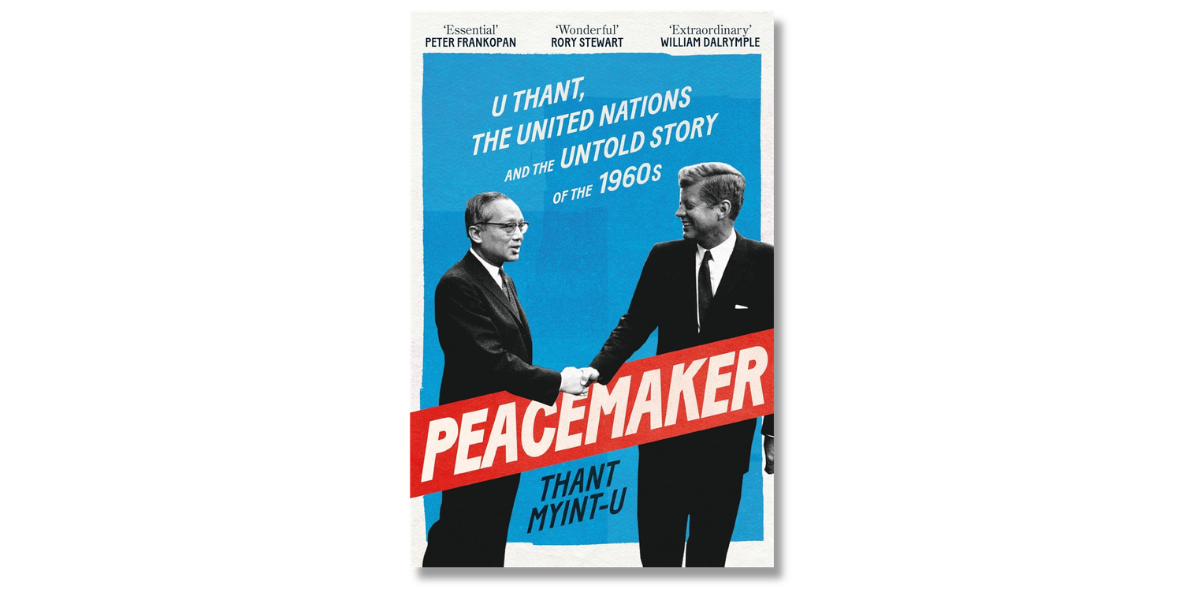
From 1961 to 1971, U Thant served as the third secretary-general of the United Nations, recording the longest tenure of any UN secretary-general to date. Despite this, he is today largely forgotten – at least in the global conversation, if not closer to his homeland. In a new book, his grandson, the historian Thant Myint-U – who himself spent many years working at the same institution his grandfather once led – revisits the career of a diplomat whose role in shaping 20th-century international politics has been unfairly overlooked. Peacemaker: U Thant, the United Nations and the Untold Story of the 1960s traces U Thant’s journey from his early life in Burma to the key role he played in many of the major geopolitical crises of the Cold War. Drawing from personal archives and UN records, the book also reveals previously unpublished details of the diplomatic history of the era.
U Thant’s rise to international prominence was remarkable. He was not born into a wealthy or influential family, nor even in one of Burma’s major cities. His life started in Pantanaw, in the Ayeyarwady region of southwestern Burma, where he also began his career as a schoolteacher. During the late colonial period, as Burma chafed under British rule, U Thant was drawn into the currents of Burmese nationalist politics, though his instincts were always moderate – a disposition he would later lean into while navigating the fractured geopolitics of the Cold War.