

TYLER WILLIAMS’S If All the World Were Paper: A History Of Writing In Hindi contains a subtle but powerful argument that cuts through the rhetorical postures and ideological assumptions that define much of the contemporary discourse surrounding Hindi. The book focuses on materiality, on texts in the archive, and so on physical objects; it is objective in that sense – an object history. It focuses as well on plurality. This plurality derives from the various social contexts that make written language useful, urgent, or necessary. And these specific social circumstances produce different types of material documents, full of linguistic and literary variety.
Williams is committed to telling textual histories, to discoveries and rediscoveries of the archive and to arguing for a somewhat chaotic, bottom-up definition of language and literature. In a time when Hindi is used in India as a tool by centralised power to impose its mandates on a diverse population – that is, as a tool of oppression – this history takes on particular political significance. Hindi is one of India’s most widely spoken languages and one of the official languages of the Union, but efforts to promote it as a common national tongue have long been contested, particularly in non-Hindi-speaking parts of the country. The language question is therefore inseparable from debates over linguistic diversity, federalism and the cultural politics of the Indian state.
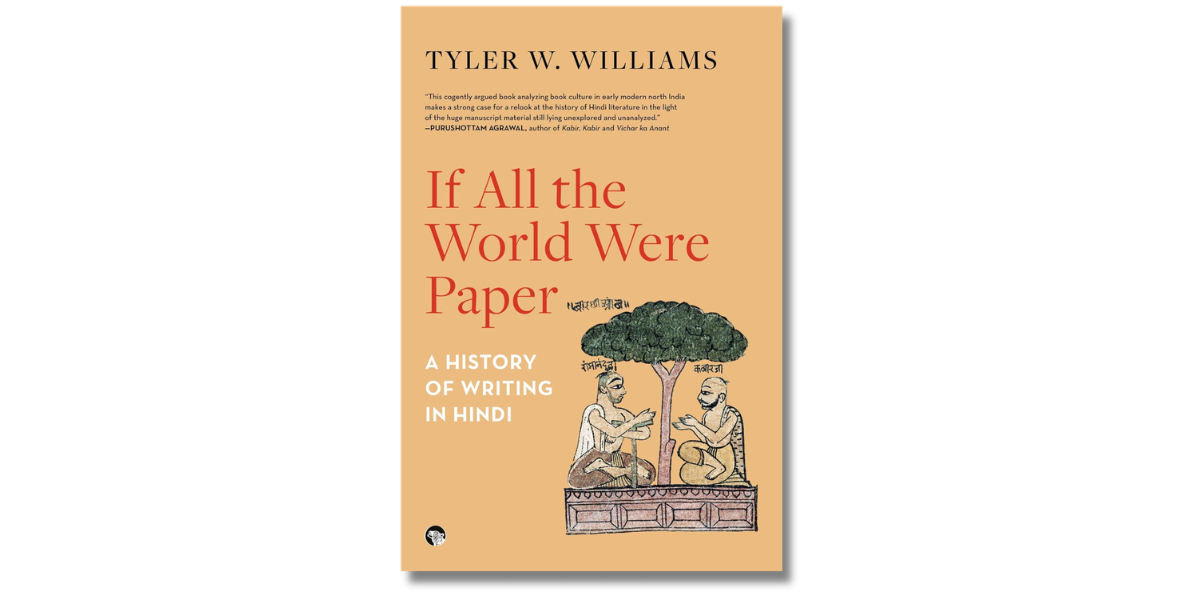
The book provides a counter-narrative: here, Hindi is ungovernable by the top echelon of society. Instead, it emerges through the organic and diffuse social contexts where it is an adaptable tool for communication and art. Williams’s history of early modern Hindi also reveals a literary world far more diverse and materially complex than the modern definition of Hindi suggests. By recovering the different physical forms of the pem-katha, the gutaka, the pothi and the vani, he challenges attempts to impose a fixed, unified history on a language whose past was marked by linguistic, literary and social plurality. In doing so, he offers not only a new way of understanding Hindi’s history, but also a timely intervention in contemporary debates over who gets to define a language, its literature and its cultural past.