

THE ACTOR-TURNED-POLITICIAN Vijay’s victory in Tamil Nadu’s state assembly election this April was unexpected. It defied the predictions of intellectuals, journalists, pollsters, astrologers – and, one suspects, of the new chief minister himself. Because it was assumed that he would lose, the relentless media attention showered on his party before the election was dismissed with scepticism, and most attempts to explain the Tamilaga Vettri Kazhagam (TVK) phenomenon fell back on worn tropes: the ingenuous masses and “hero-worship”, the blurring of image and reality, the psychic damage wrought by social media, “depoliticisation”.
An original and serious assessment of Vijay as the embodiment of what one recent headline called a “tectonic” shift in Tamil society came from a place unlikely as his victory: an agglutinative 400-page mosaic of theory, ethnography, literary criticism and even a bit of fiction, written by a Madurai based professor of folklore studies and published by an obscure press last December. The book is Jallikattu: Kizharchi ennum Suzhchi – or “Jallikattu: Agitation as Assemblage” and its author T Dharmaraj. In digressive, insouciant prose that owes much to French philosophers Gilles Deleuze and Felix Guattari, his study reads like a “schizophrenic out for a walk” amid the jallikattu protests of 2017 — Tamil Nadu’s largest since the anti-Hindi agitations in the 1960s.
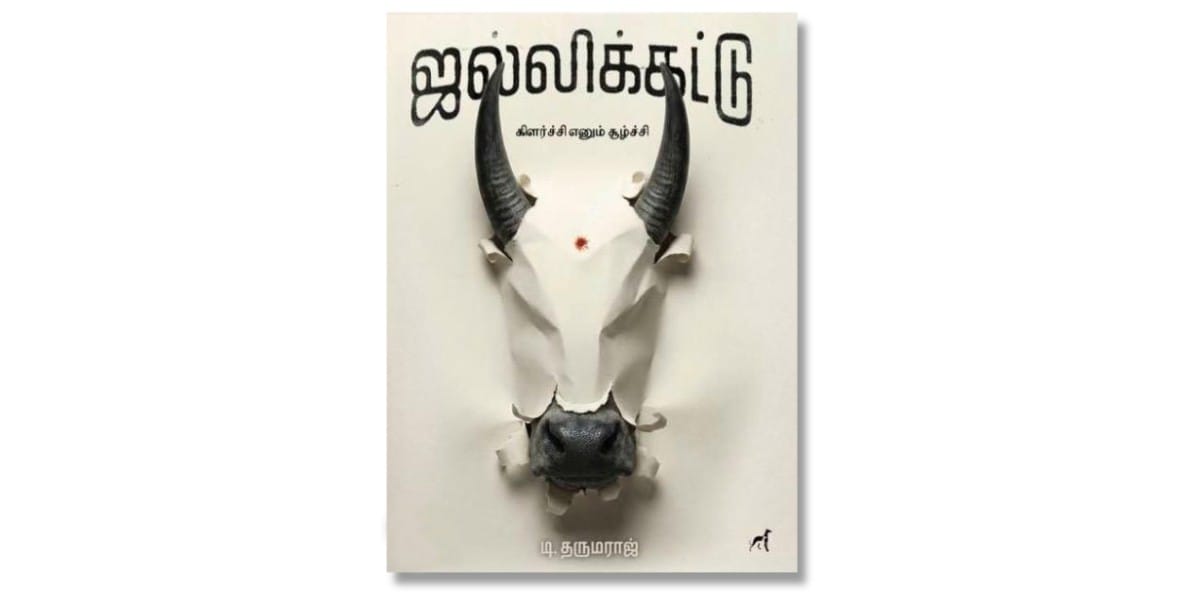
For years, Dharmaraj has been known to a small circle of Tamil readers as an iconoclastic presence in the unheeded and conventionalised worlds of folklore studies and Dalit thought. Until now, he has been best known for his work on Iyothee Thass, the pioneering anti-caste thinker whose work anticipated, but did not directly influence, the reconstructive visions of both Dravidian thought and Dalit Buddhism. Dharmaraj stands apart from others who have written on Thass for his willingness to emulate and extend the latter’s idiosyncratic and speculative method.
At the end of the 19th century, Thass, as a fellow traveller of the Theosophists, was privy to the Buddhist revival movement spearheaded by Colonel Henry Steel Olcott and Angarika Dharmapala – which would, among other things, lead to the emergence of Sinhala nationalist Buddhism. Roughly a century before the Sri Lankan civil war and its horrible denouement, he grasped the destructive heart of their vision of repressed Aryan glory. Thass was similarly troubled by the nascent but rising Neo-Hinduism that was shaping the way India’s modernity was imagined. His response was to undertake a vast reconstruction of Tamil history, portraying it as the story of the defeat and long subsequent erasure of indigenous Dravidian Buddhists. His method combined heterodox interpretations of classical Tamil literature with imaginative excavations of the deep past based on the materials of ethnography: rituals, festivals, practices.