

WHEN LYSE DOUCET began talking to the staff of Kabul’s Hotel Inter-Continental, she found that their memories were rarely about the coups or the upheavals. Instead, Hazrat, the hotel’s oldest employee, went on at great length about the white plush towels used by the guests. “He actually mimicked the way the wealthy tourists would walk,” Doucet told me, “flinging these soft white plush towels over their shoulders and making their way across the marble floor, oozing privilege and a life of ease that was so different from his own.”
Moments like these form the heart of The Finest Hotel in Kabul, Doucet’s sprawling first book, which recently won the 2026 Women’s Prize for Non-Fiction. It tells the story of Afghanistan’s first luxury hotel, established in 1969 under the modernising monarchy of Zahir Shah. The InterCon, as it is commonly called, was to be a proud symbol of a nation stepping into a new modern era. The white, brutalist cube on top of one of Kabul’s scenic hills was built with British support – which amounted to both an attempt at getting on the right side of the modernising monarch as well as a shrewd move in Cold War strategy. The roof was embellished with a stylised letter K picked out “in a most beautiful blue”, Doucet writes. The premises came complete with a gleaming pool, European breads in the kitchens and tennis courts. Focusing on a luxury hotel may seem an unusual choice for what the book’s subtitle calls “A people’s history of Afghanistan”. But the limelight is squarely on the Afghans who kept the institution ticking through the country’s many tumultuous years – and for whom it was misl-e-khana, like their own home.
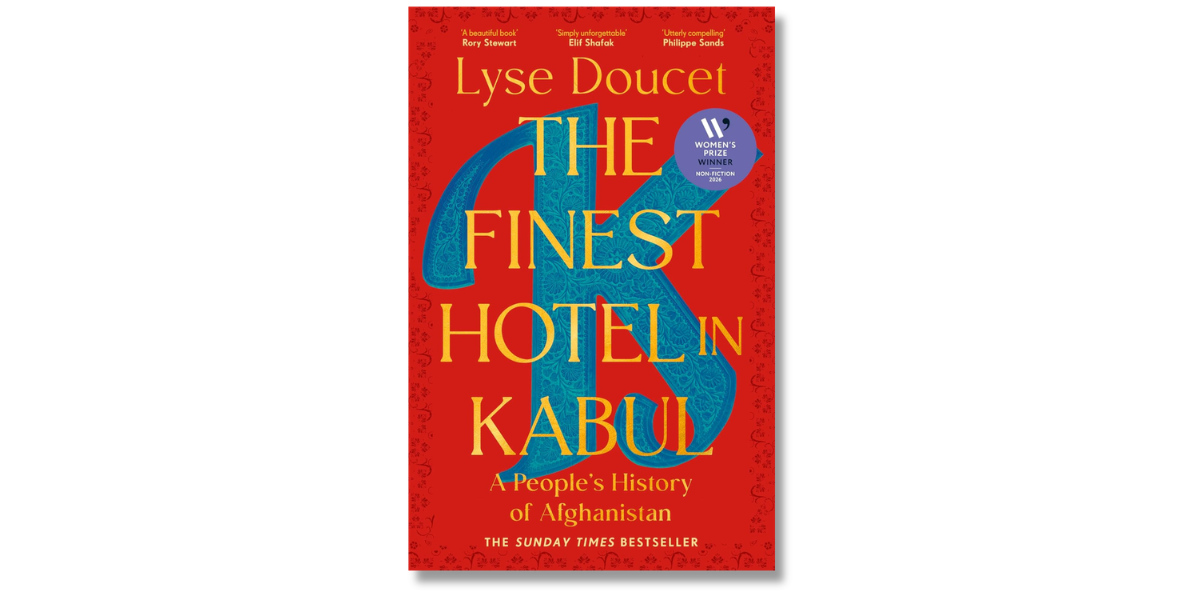
Doucet is one of the iconic figures of global journalism. Today the BBC’s Chief International Correspondent, she has reported on Afghanistan for over three decades. She first arrived in Kabul in 1988, “nudged out of Pakistan by a competitive colleague” and having secured a rare visa just in time to cover the Soviet withdrawal. “The hotel was my home for a year then, so when I thought of telling Afghanistan’s story in a way that went beyond the news, I thought of the InterCon,” she told me. As a government-run hotel, it also had a revolving door of politics. Through each of Afghanistan’s regime changes since its founding, the InterCon served its shifting sets of rulers: from the monarchy to the Soviet-era Communists, from the mujahideen to the US-backed governments. Every so often, the portraits of rulers would be replaced. “Once again,” the book notes at one point, “everything had changed and nothing had changed.”