
📚 Southasia Review of Books - 29 January 2026

Hello reader,
Every year, I give myself some kind of reading challenge. Sometimes it’s small – read more translations; return to classics. Sometimes it’s more ambitious: devote some time to filling a blind spot.
One side effect of my job is that I get to know about a lot of books I haven’t actually read. In 2026, I hope to make time for titles I’ve encountered but never actually got around to reading. But I’ll try not to focus too much on older books; another perk of working on Southasia Review of Books is looking forward as well as back. Nothing can replace the thrill of discovering a fantastic debut, or realising you’re holding a classic in the making.
Maybe this is the year you’ve decided to bump older, culturally important, or much-recommended Southasian works to the top of your to-be-read list. Or maybe you’re determined to keep up with new writing from across the region as it appears. Either way, I’d love to hear about your reading resolutions for 2026. You can write to me at shwethas@himalmag.com – we may feature your response in an upcoming SaRB newsletter.
If SaRB has helped shape your reading goals, or introduced you to books you might otherwise have missed, please consider becoming a paying Himal Patron. Your support helps make this kind of coverage possible!
To contribute more, visit himalmag.com/support-himal.
📚 Essays and excerpts from Himal’s pages this fortnight
Romila Thapar on the emergence of a common Indian identity
How identities in early and medieval India were formed, contested, and why a shared sense of “Indianness” may be a colonial-era development
By Romila Thapar and Namit Arora
The changing face of children’s literature in Nepal
From Panchayat-era moralism to donor-driven publishing, and today a rising crop of local initiatives, the shifts in Nepal’s children’s literature reflect the difficult history of the country itself
By Niranjan Kunwar
📚 Announcing Himal Fiction Fest 2026
Himal Fiction Fest 2026 is now open for submissions!
We’re looking for original English-language translations of fiction, new or old, from any Southasian language. You can submit translations of short stories or excerpts from longer literary works. As always, we’re keen to spotlight work that travels across languages and contexts, and brings a wide variety of writing to new audiences.
The deadline for submissions is 1 April. You can find full details and guidelines here.
📚 This month in Southasian publishing
Celebrating Southasian writing and ideas
January and February are busy months on the Southasian literary calendar, with major festivals foregrounding both established and emerging authors.
The Jaipur Literature Festival on 15-19 January featured sessions with Banu Mushtaq, winner of the 2025 International Booker Prize, and Booker laureate Kiran Desai, who returns to fiction after two decades with The Loneliness of Sonia and Sunny. Translators Daisy Rockwell and Deepa Bhasthi spoke with Kanishka Gupta about the layered journeys of translated texts, while the programme as a whole placed a renewed emphasis on writing in regional languages. The Telugu writer Volga, Tamil writer Salma were among those spotlighted.
The Kerala Literature Festival marked its ninth edition on Kozhikode Beach on 22-25 January. The four-day event brought together a wide range of writers, including Kiran Desai, Pico Iyer, Pratibha Ray and Daisy Rockwell, continuing the festival’s reputation for combining international voices with regional and national conversations.
On 22-26 January, the Kolkata Literary Meet opened with an impressive line-up, including Pulitzer Prize–winning writer Jhumpa Lahiri, Banu Mushtaq, and Barbara Kingsolver, a Pulitzer Prize winner and two-time Women’s Fiction Prize recipient.
📖 From the Himal archives: Meghna Rao on how Banu Mushtaq’s International Booker-winning Heart Lamp, translated by Deepa Bhasthi, marks many historic firsts for Kannada literature and offers an unflinching look at Muslim women’s lives in Karnataka.
Buddhism, Brahminism and caste
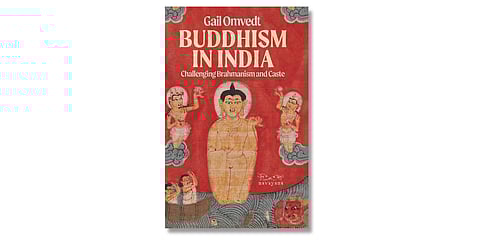
Gail Omvedt’s Buddhism in India: Challenging Brahmanism and Caste (Navayana Publishing, January 2026) has been reissued this month. Building on B R Ambedkar’s framing of Indian history as a conflict between Brahminism and Buddhism, Omvedt offered a radical re-reading of 2500 years of Indian history, tracing Buddhism’s sustained challenge to caste and its political relevance in the modern era.
📖 From the Himal archives: What might a caste-free India look like? Gail Omvedt on the long wait for an India in which caste names have lost their meaning.
A witness to Nepal’s transformation
In A Life in Public Service: Nepal from Autocracy to Democracy (Penguin, January 2026), translated by Prawin Adhikari, Bhekh Bahadur Thapa, the former Nepali foreign minister, reflects on a six-decade career in public service. Summoned at just 24 by the king Mahendra Shah to join the National Planning Council, Thapa witnessed Nepal’s transformation from a feudal protectorate under the Ranas to a federal democratic republic. Part memoir, part political history, the book offers a deeply personal insider’s perspective on the triumphs and challenges of nation-building in the country.
Sex, desire and rights in India
Love, Sex and India: The Agents of Ishq Anthology edited by Paromita Vohra (Queer Directions/Westland Books, January 2026) brings together stories from the much-loved Agents of Ishq project, which since 2015 has helped shape a homegrown, sex-positive conversation in India. The anthology reads as a collective diary of desire – featuring accounts of first dates and situationships, queer journeys and friendships, alongside reflections on heartbreak, violence and vulnerability. Together, the pieces capture the messy, intimate textures of love and lust in contemporary India.
Transforming Rights: How Law Shapes Transgender Lives, Identity and Community in India edited by Jayna Kothari (Context, January 2026) examines the gap between legal progress and lived realities for transgender people in India. Bringing together scholars, activists, lawyers and community members, the essays explore constitutional protections, access to education, healthcare and livelihoods, questions of family and intimacy, and the intersections of trans rights with caste and indigeneity, while mapping the reforms still needed to realise meaningful equality.
📖 From the Himal archives: As inter-caste and inter-faith couples contend with discriminatory laws and social surveillance in India, Ankush Pal and Alfiya Azeem Khan unpack what it means to love across entrenched social norms.
+ Rahul Rao examines four recent books to ask why same-sex marriage has become a focal point of queer politics in India, and how Southasian queer life is reshaped across local, diasporic and transnational contexts of belonging.
Poetry, prose and dissent
In The View From Here: Stories and Poems of Many Indias (Simon and Schuster, January 2026), the editor Githa Hariharan asks, “Can poetry be political?” The anthology’s answer is unequivocal. Drawn from the multilingual cultural journal Guftugu, which ran from 2015 to 2022, the collection brings together 20 stories and more than 50 poems that insist on plurality, dissent and equality. Edited by Hariharan and K Satchidanandan, The View From Here bears witness to the many Indias, past and present, at a moment when cultural and political forces seek to flatten difference into a single mould.
Autonomy and ecology in Myanmar’s borderlands
In Possessed Landscapes: Experiments in Conservation and Sovereignty in Southeast Myanmar (University of Washington Press, January 2026), the anthropologist Tomas Cole examines how indigenous Karen communities in southeast Myanmar have reimagined land, conservation and sovereignty in the aftermath of decades of conflict. Centred on the Salween Peace Park, a community-led conservation area shaped by war, ceasefires and indigenous resistance, the book explores how conservation becomes a strategic, revolutionary practice amid state violence and ongoing struggle.
The histories of India’s national symbols
We, the People of India: Decoding a Nation’s Symbols (Context, January 2026) by the musician and cultural commentator T M Krishna traces how India’s national symbols were imagined, debated and transformed over time, often with little formal documentation. He examines the histories of the tricolour and the Ashokan lions, the drafting of the preamble and debates around the national song and anthem, inviting readers to reconsider what these symbols signify in contemporary India.
🎧 From the Himal podcast archives: A conversation with T M Krishna and Harsh Mander on Tamil Nadu’s resistance of the RSS.
Sri Lanka at the crossroads of the Indian Ocean
Both colonial-era Colombo and earlier centuries of Sri Lankan history reveal the island’s position as an important node in Indian Ocean networks.
In Colombo: Port of Call (Penguin India, January 2026), Ajay Kamalakaran traces the city’s role as a key hub in the British Empire’s maritime networks, connecting Europe, Australia, Japan and China. Through the impressions left by visitors such as Anton Chekhov, Mark Twain and Mohandas K Gandhi, the book captures the social hierarchies, imperial attitudes and cosmopolitan life of a bygone era of bustling ports.
Serendipitous Translations: A Sourcebook on Sri Lanka in the Islamic Indian Ocean edited by Nile Green (University of Texas Press, January 2026) opens up a thousand years of Muslim encounters with the island. Bringing together travelogues, literary works, commercial records, inscriptions, and pilgrim manuals in Arabic, Malay, Turkish, Urdu, Dhivehi, Sinhala, Arabu-Tamil and Tamil, the anthology reveals Sri Lanka as a vibrant node of trade, pilgrimage, diplomacy and cultural exchange. Green’s introductions situate the texts within broader Indian Ocean networks, making this a comprehensive collection of primary sources on Sri Lanka’s Islamic connections.
From the Himal archives: In a review essay on Sri Lanka at the Crossroads of History, edited by Zoltan Biedermann and Alan Strathern, Tamara Fernando considers cosmopolitanism as an antidote to the island’s nationalist history.
Until next time, happy reading!
Shwetha Srikanthan
Associate Editor, Himal Southasian
💌 Are there any new books, authors or events you would like to see featured? I’d love to hear from you. Write to me at shwethas@himalmag.com.
📚 Read past editions of the SaRB newsletter, listen to previous episodes and dive into Himal’s Books coverage.
🫰 If you’re enjoying what you’re reading, please consider recommending SaRB to others. Simply share the podcast or newsletter, or sign up here.