

IN RAILSONG, Rahul Bhattacharya’s second novel, the protagonist, Charulata “Charu” Chitol, works in the personnel department of the Indian Railways. In 1991, when deputed as a census enumerator, she has a chance encounter with an old flame and his partner. As she exits their apartment building, unsettled, a sheaf of forms slips out of her L-folder. But there is help at hand. A driver gathers “Telugu and Maithili and Varhadi and Seraiki”, and a peanut-seller “seizes Matang, Rohidas, Dongar Koli and Chalvadi” even as “Sawantwadi, Madurai, Shikohabad, Bombay … dash into the compound wall.”
This scene takes the literal route to address a dilemma of the Indian novelist: How to fit the capacious, loquacious country into sentences and chapters? How to do so in a way that feels both broadly representative and oddly specific? These questions may seem less pressing in contemporary fiction, when individual anxieties have become, so to speak, the main character. The need to hitch a fictional character’s wagon to national history can feel like a relic of the 20th-century novel, of a time when nation-states’ personalities still felt freshly formed.
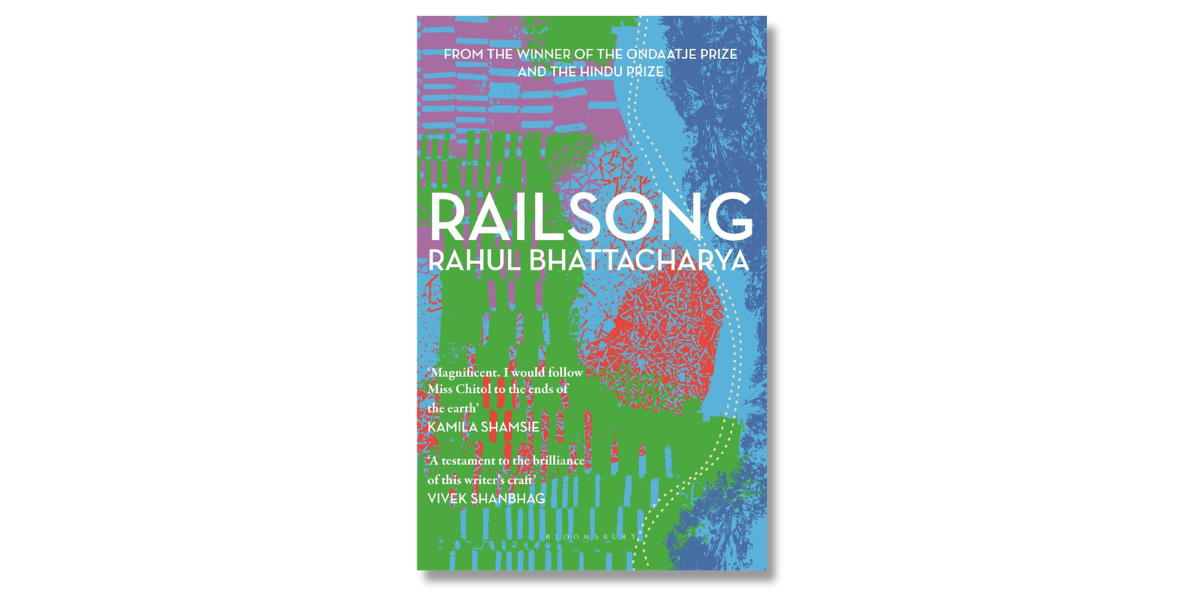
‘Railsong’ by Rahul Bhattacharya (November 2025, Bloomsbury Publishing)
Yet writing the Great Indian Novel remains a sincere fantasy of serious writers. The temptation is understandable: the scope so epic, the feelings so complex, the shot at posterity there for the taking. As literary challenges go, it is among the juicier ones, and Bhattacharya is naturally inclined to take a bite. In his first two books – a cricket-themed travelogue through Pakistan and a fictional bildungsroman set in Guyana – he displayed a gift for taking a country’s temperature by combining lush renderings of scenery with musical dialogue and informed historical detail. His footloose characters, real and imagined, embodied their countries in prepossessing ways while also reflecting the young writer’s wonder at the worlds he was discovering.