Year in review: Ten great book reviews of 2025
To mark the end of the year, we at Himal Southasian present a selection of our most-read book reviews of 2025. Together, these pieces reflect the breadth of Southasian writing and ideas we covered. and the kinds of critical conversations our reviewers helped spark over the past year.
In no particular order, here’s our selection:
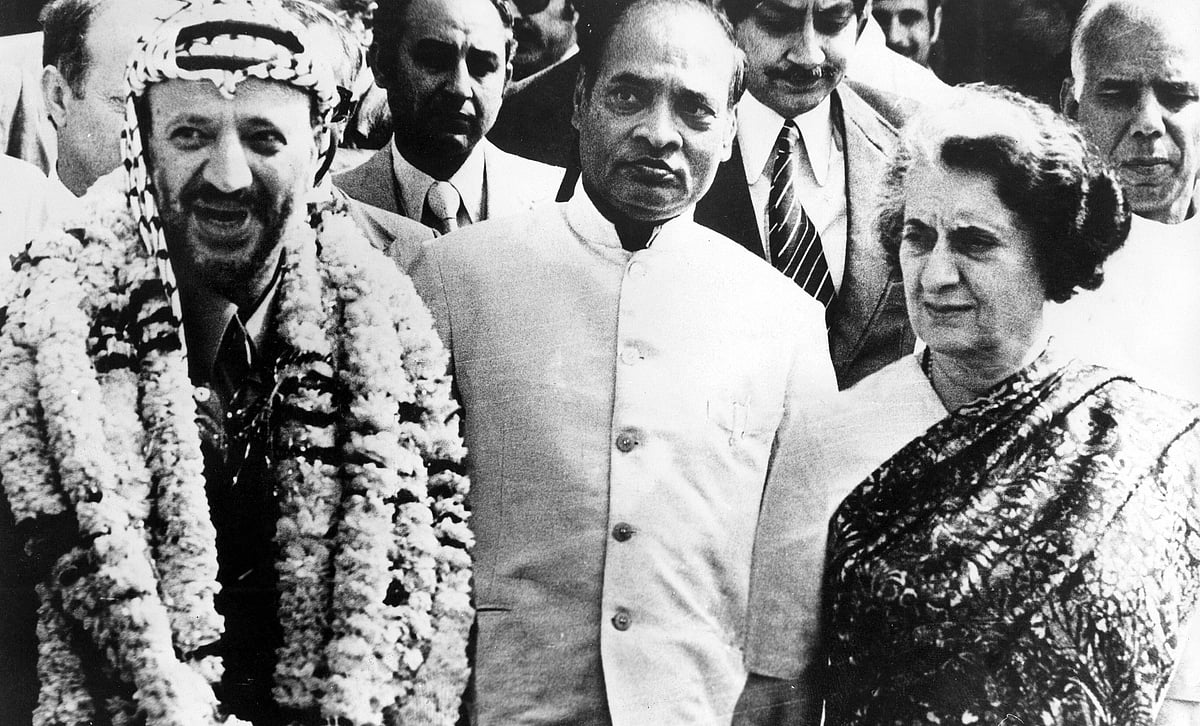
It seems that India has forgotten its shared history of being on the receiving end of Britain’s imperial designs – a history that once shaped its solidarity with Palestine, Chintan Girish Modi argues in his review essay.
Strategic concerns have increasingly pushed the country towards Israel, with historical and moral solidarities set aside. Despite the material support India has extended to Palestine, the new normal across ruling governments in India seems to be cynically paying lip service to Palestine while keeping the security relationship with Israel open.
Increasingly, “cow protection” rhetoric has also coincided with the enforcement of a hegemonic vegetarianism in India. There have been official bans on meat during Hindu and Jain religious festivals, proposals to ban the display of meat-based dishes outside eateries and restaurants, and numerous refusals to serve eggs in government-sponsored mid-day meals for public-school children.
By now, the state-sanctioned brutality of cow protection, buttressed by anti-slaughter laws in all but six Indian states and frequent complicity by police forces, is on blatant display. In her review essay, Sohel Sarkar turns to three new books to unpack the violent roots of caste-based vegetarianism and India’s dairy industry as Dalits and Muslims continue to be targeted by cow-protection vigilantes.
The sanctioned former Sri Lankan navy chief’s memoir The Turning Point: The Naval Role in Sri Lanka’s War on LTTE Terrorism contains potential admissions relevant to alleged crimes committed during the country’s civil war, and raises serious questions of publisher accountability.
Frances Harrison’s review examines the book both as a literary work and as a document of potential evidentiary significance. Karannagoda was Sri Lanka’s Navy Commander from 2005 to 2009, at the bloodiest phase of the country’s quarter-century-long civil war, when naval gunboats indiscriminately shelled the coastline of northern Sri Lanka as hundreds of thousands of Tamil civilians were sheltering there. During his tenure, a secret torture site was run in the country’s most important navy base.
For Penguin India – part of the world’s largest trade publisher – to have put out this memoir without grappling with this massive record of alleged violations of international humanitarian law by the author is also troubling.
The wider Indian liberal intelligentsia often interpret Kashmir through a state-centric, hegemonic framework that tends to downplay the distinct constitutional history that has underpinned the relationship between Jammu and Kashmir and the Indian Union. In doing so, they contribute to the erasure of this history through a violent production of knowledge that blurs the line between state narratives and epistemic truths. Much academic work shows how scholarship has been shaped to “depoliticise” Kashmir, obscuring the political distinctiveness it retained when acceding to the Indian Union in 1947.”
Burhan Majid argues that one such text – Aman Hingorani’s Unravelling the Kashmir Knot – is emblematic of Indian liberals’ depoliticisation of Kashmir, mirroring the Bharatiya Janata Party’s justification for abrogating Article 370.
Rollo Romig’s telling of the story of the slain journalist Gauri Lankesh is more than just a murder mystery, more than just an exposition of India’s politicised policing, its dysfunctional justice system, the vulnerability of these to power or money. In asking questions about why certain people murder, how they overcome moral qualms, and what gives them the ability to eliminate voices they dislike, Romig explores the politics and philosophy of hate and intolerance. The empathy he musters and the access he secures to those who were close to Gauri allows him to present an intimate and authentic picture of the activist-journalist in all her complexity.
Laxmi Murthy reviews how Romig’s book uncovers the making of Gauri Lankesh, her fight against Hindu nationalism, and how the journalist’s murder exposes the cost of dissent in an increasingly intolerant India.
The renowned figure of modern Tibetan literature Tsering Döndrup’s landmark work of fiction is arguably The Red Wind Howls, released (briefly) in 2006. Yet this novel is also something of an anomaly among his books, since its daring contents quickly led to it being banned by the Chinese authorities. Within the People’s Republic of China, it has long been unavailable to Tibetan readers, and it has been almost impossible to find a copy of it even outside of China. Christopher Peacock’s English translation of the novel was published by Columbia University Press this year, hot on the heels of a recent French edition. Finally, through translation, this repressed masterpiece is once again seeing the light of day.
Peacock reflects on this new translation and how Tsering Döndrup’s The Red Wind Howls reckons with China’s erasure of Tibet’s suffering while reclaiming Tibetans’ right to critique their own culture and history.
The majority of well-known Kannada literature in translation today centres on dominant-caste, male voices – a disservice to the language’s long, syncretic, and contested literary history in Karnataka. This lack of diversity has, in many ways, reinforced the monolithic Hindutva project that has taken hold in much of the state.
A recent translation changed Meghna Rao’s perspective. The lawyer, activist and author Banu Mushtaq’s Heart Lamp, translated by Deepa Bhasthi.
This collection of twelve stories – both the first original Kannada text to win the International Booker Prize and the first-ever short-story collection to do so – marks historic firsts for Kannada literature while offering an unflinching look at Muslim women’s lives in Karnataka. The stories are frank, intricate and powerful, portraying women living isolated, constrained lives; Muslims navigating faith under the pressures of money, power, and prejudice; and the class differences that strain relationships within these communities.
Bhutan famously known as the “Kingdom of Happiness,” a reputation built in part on its pioneering Gross National Happiness index, a novel approach to measuring societal progress that doubles as an effective public-relations slogan. Yet, not all is well in the Land of the Thunder Dragon. Rising out-migration, economic stagnation, the collapse of tourist arrivals since the Covid-19 pandemic and allegations of ethnic cleansing have cast a long shadow over its carefully cultivated image. These complex challenges demand a skilled approach to political leadership, a topic explored by Bhutan’s prime minister Tshering Tobgay in his new book, Enlightened Leadership: Inside Bhutan’s Inspiring Transition from Monarchy to Democracy.
Maximillian Morch’s review unpacks how Tshering Tobgay’s memoir is all praise for Bhutan’s monarchy and fledgling democracy, but it misrepresents the Lhotshampa expulsion and the fraught political history of the “Kingdom of Happiness”.
In recent years, there has been increasing buzz surrounding the rise of Southasian science fiction. However, a quick look through the most popular works in this genre reveals that in many cases the “Southasian” element is a certain vision of Hindu mythology and religious practices.
The Blaft Book of Anti-Caste SF, published by the independent Chennai-based Blaft Publications – which champions pulp fiction, folklore, and other genres mainstream publishers tend to avoid – offers a striking corrective. In his review essay, Sreyartha Krishna outlines why the collection demonstrates the power of speculative and science fiction to illuminate anti-caste struggles in Southasia, connecting the genres to the rich traditions of Dalit and Adivasi literature.
Arundhati Roy wrote Mother Mary Comes To Me in memory of her mother, the feminist educator Mary Roy, who passed away in 2022. Despite being a chronicle of the pain of their difficult relationship, the book is also, straightforwardly, an account of the abundance of riches, both material and otherwise, that Roy has created and accumulated through her life. Mother Mary brings Mary Roy alive, but not in the traditional way of biography. It brings to life a private history that Roy has already drawn on, sometimes to transcendent effect, in her fiction.
In our most anticipated review essay of the year, Supriya Nair explores how Arundhati Roy’s memoir of love, loyalty and the larger-than-life Mrs Roy, puts into perspective a whole career of writing about the problem of belonging.