This is Southasia Weekly, your regular update on the latest from Himal and across the region. If you only read one email from us all week, this should be it.
While watching continued protests against the Chief Election Commissioner and the Modi government in India, where I live, my attention is also drawn this week across the India-Pakistan border to Khyber Pakhtunkhwah – a stronghold of Imran Khan’s Pakistan Tehreek-e-Insaaf (PTI), where the federal government in Islamabad has taken direct control by declaring an emergency, dismissing the provincial government and imposing governor’s rule.
Its stated pretext is to curb escalating terrorist activities, but most see this as a clampdown against a political rival by the government under the Pakistan Muslim League-Nawaz (PML-N) and Pakistan Peoples Party (PPP) – and, not to forget, Pakistan’s military establishment. The PTI had begun a “long march” to Islamabad seeking Khan’s release of Khan from jail, and the government, under Shehbaz Sharif and backed by the military, was worried about it gathering momentum.
The imposition of emergency and the subsequent arrest of PTI leaders – including the Khyber Pakhtunkhwah chief minister, P Sohail Afridi – has sparked further unrest and protests within the province. Some in Pakistan have noted that such drastic measures are generally signs of desperation – moves made in an endgame. Meanwhile many in India are saying similar about the Modi government’s reaction to recent protests. Himal’s stories for this week look at the “undeclared Emergency” in India and at an overlooked facet of the military’s hold over Pakistan. Meanwhile, the News Dive below unpacks the complexities of the march in Pakistan and the situation in Khyber Pakhtunkhwah.
Himal can publish journalism and analysis on Pakistan without fear from the country’s government, military or corporate interests, even as the media within Pakistan is tightly constrained. We need your support as a paying Patron to sustain our independence, whether we’re publishing on Pakistan or on any part of Southasia. For a limited time, we’re offering a 20% discount on our Patron plans, so make sure to take advantage while you can.
|
Nayantara Narayanan Associate Editor Himal Southasian |
|
Here’s what Himal published this week:
POLITICS
The rise and rise of the Pakistan military’s PR machine
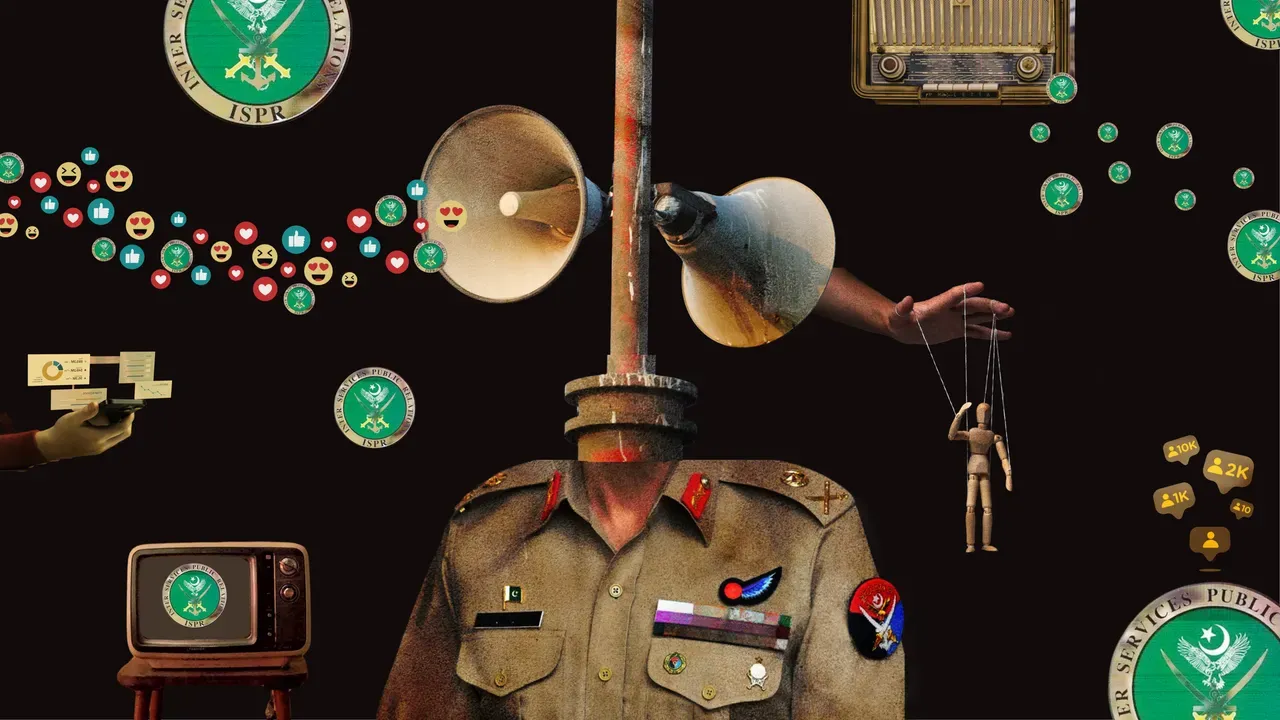
Ayesha Siddiqa, perhaps the top scholar of Pakistan’s military, digs deep into the ISPR, the military’s public relations arm, and traces how it has been used to reshape the social contract and public narrative in line with the military’s needs and growing ambitions.
POLITICS
With the crackdown on CJP protests, Modi’s undeclared Emergency shifts into higher gear
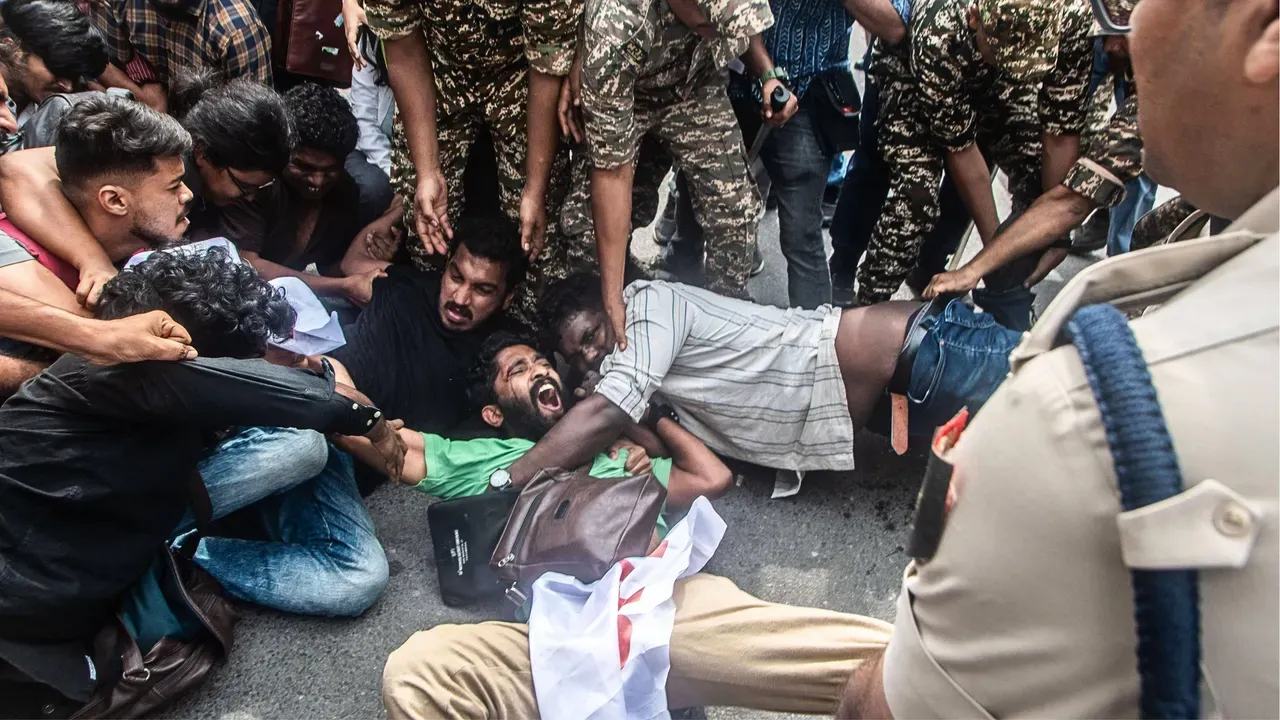
Mohit M Rao, who was in central Delhi during the Modi government’s massive clampdown against protestors on 10 October, reports on how sweeping detentions and security measures are inviting comparisons with the Emergency under Indira Gandhi.
Here’s what happened in Southasia this week:
NEWS DIVE
Emergency in Khyber Pakhtunkhwah
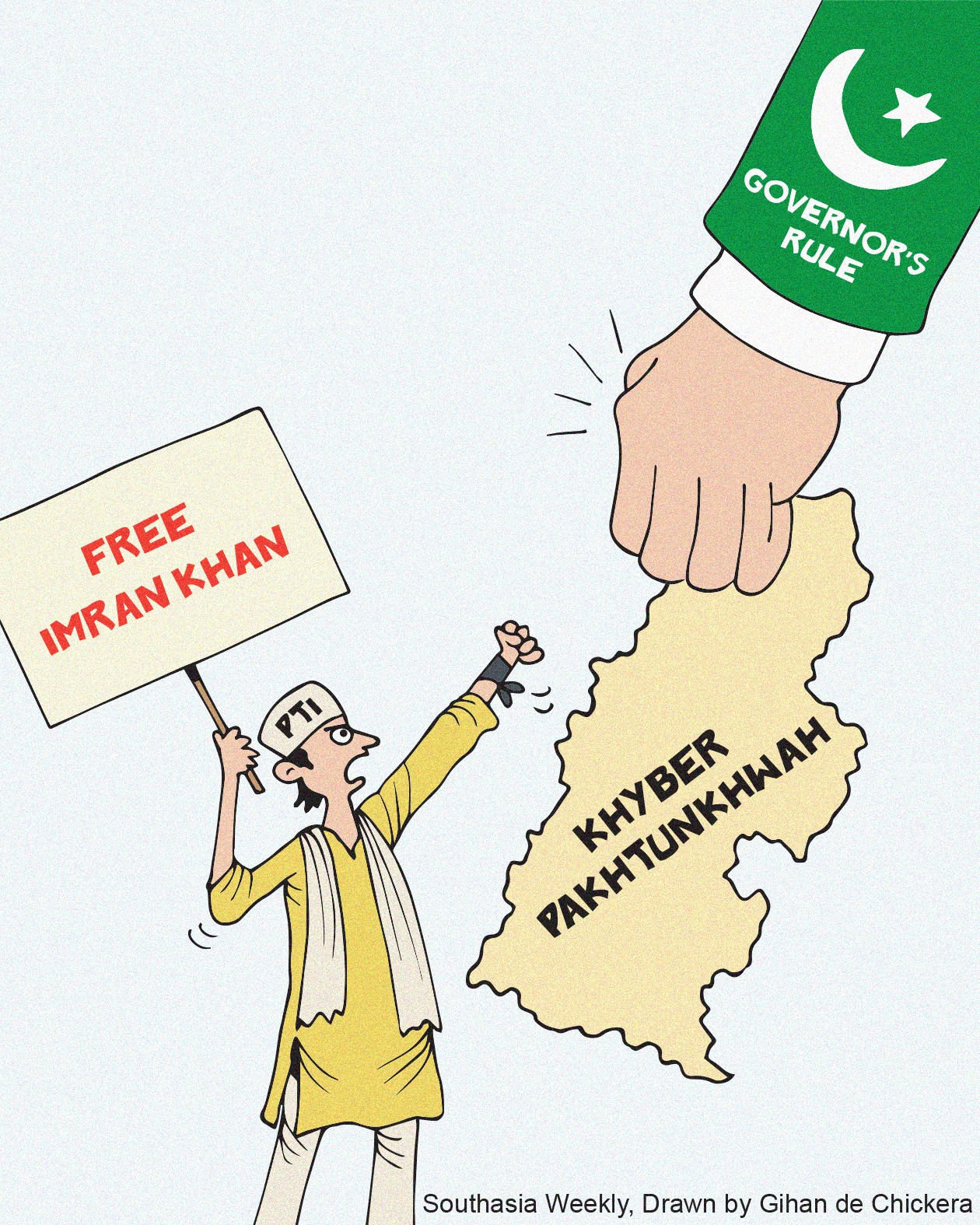
On 11 October, Pakistan’s federal government abruptly declared governor’s rule and a state of emergency in Khyber Pakhtunkhwah, effectively bringing the province’s administration under its control and snatching it away from the opposition Pakistan Tehreek-e-Insaaf (PTI). Even as the federal government justified the move as being needed to protect against militancy, thousands of PTI supporters marched in protest, calling for the release of their incarcerated leader, Imran Khan. The province's chief minister, Sohail Afridi of the PTI, has been either detained or placed under protective custody alongside other party leaders, disrupting a planned march to Islamabad which PTI members insist will still proceed.
The imposition of governor’s rule is a sharp escalation of pressure against Pakistan’s primary opposition party. The country’s legal fraternity has challenged the move before the Supreme Court of Pakistan, noting that a required provincial assembly resolution had not been passed and questioning the legal foundation of the federal government’s claim that the constitutional machinery had failed within the province. The PTI is also contemplating legal action.
The state of emergency could exacerbate the fragile situation in Khyber Pakhtunkhwah, where a fraught security scenario is already impacting the lives of civilians caught between militancy and state repression. The move also comes amid increasing pressure on the federal government to devolve power. Longstanding tensions exist between the federal centre and provincial governments competing for scarce resources and greater autonomy. Last month, a senate panel asked the federal government to wind up 17 ministries already devolved to the provinces in law, if not in practice. At stake here is not just political rivalry, but also the shape of state power in Pakistan.
ELSEWHERE IN SOUTHASIA
- Press freedom groups accuse Delhi Police of targeting and using excessive force against journalists covering youth-led protests in New Delhi on 10 and 11 October demanding Chief Election Commissioner Gyanesh Kumar’s resignation; with journalists reporting assaults, detentions and the seizure of phones and cameras
- Sri Lanka’s former President Mahinda Rajapaksa admitted to a private hospital in Colombo on 12 October and kept under observation, amid corruption investigations involving his wife, Shiranthi Rajapaksa, and son, Namal Rajapaksa, both facing separate legal proceedings over alleged financial irregularities
- Chief ministers of all seven provinces in Nepal agree to form joint forum to press federal government for greater provincial powers and fiscal autonomy at inter-provincial chief ministers conference citing delays in transferring police and administrative authority and enacting laws on civil service, education and health
- India questions UN Human Rights body over delays in reporting on rights concerns in Pakistan-occupied Kashmir (PoK), including investigations into killings during protests, legal access for detained leaders of the Joint Awami Action Committee and internet restrictions
- Violence in Manipur kills at least nine people across Kamjong, Kangpokpi and Ukhrul districts on 9 and 10 October, amid gunfights and arson linked to increasing tensions between Kuki and Naga communities, prompting shutdowns along National Highways 2 and 202
- Kuno National Park in Madhya Pradesh refuses to disclose post-mortem reports of cheetahs that died under Project Cheetah in response to a Right to Information request by wildlife activist Ajay Dubey, citing national security exemption
- An independent review involving public health experts including representatives from the World Health Organization, UNICEF, Gavi, the Vaccine Alliance and Bangladesh’s Ministry of Health finds that Bangladesh’s government failed in response to measles outbreak in Bangladesh, citing vaccine shortages, gaps in routine immunisation and delays to implementing a nationwide vaccination campaign
- Protesters gather outside Sri Lanka’s Presidential Secretariat in Colombo on 13 October, demanding withdrawal of the Protection of the State from Terrorism Bill recently presented in Parliament, over concerns that the legislation, set to replace the 1979 Prevention of Terrorism Act, will threaten civil liberties and freedom of expression
FROM THE ARCHIVE
Revisit archival stories from Himal that add more context and insight to this week’s news updates from Pakistan, Sri Lanka and India:
 Salman Rafi Sheikh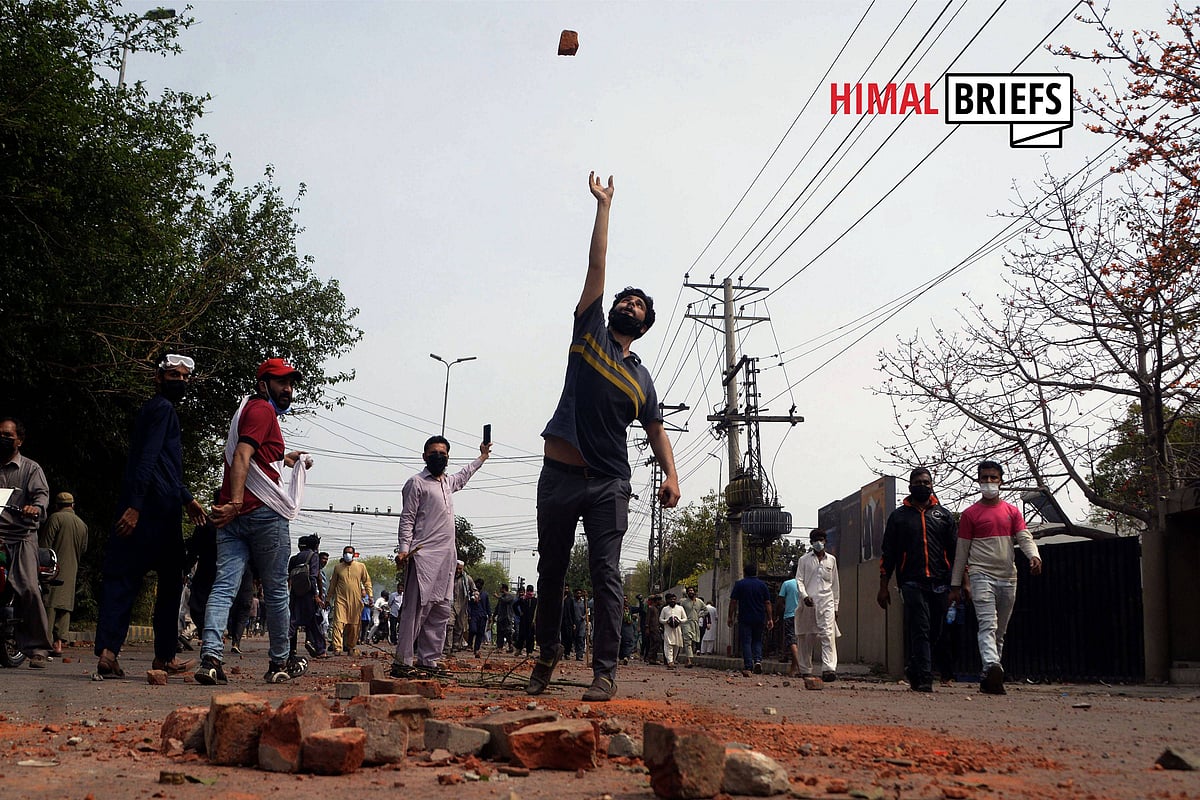
 Tisaranee Gunasekara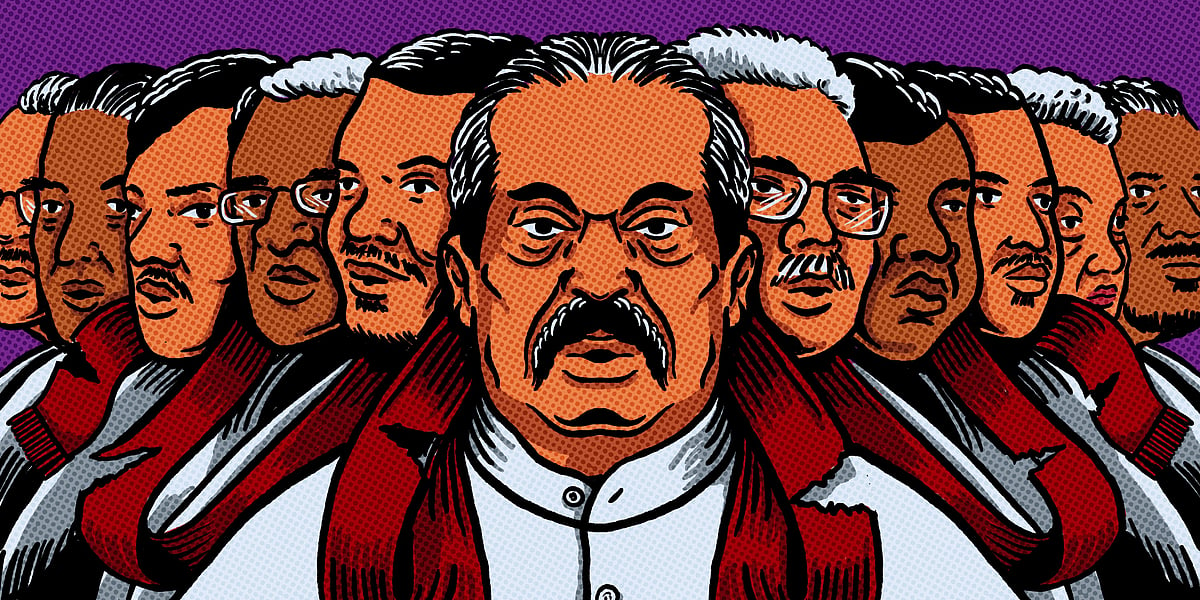
 Nikita Jain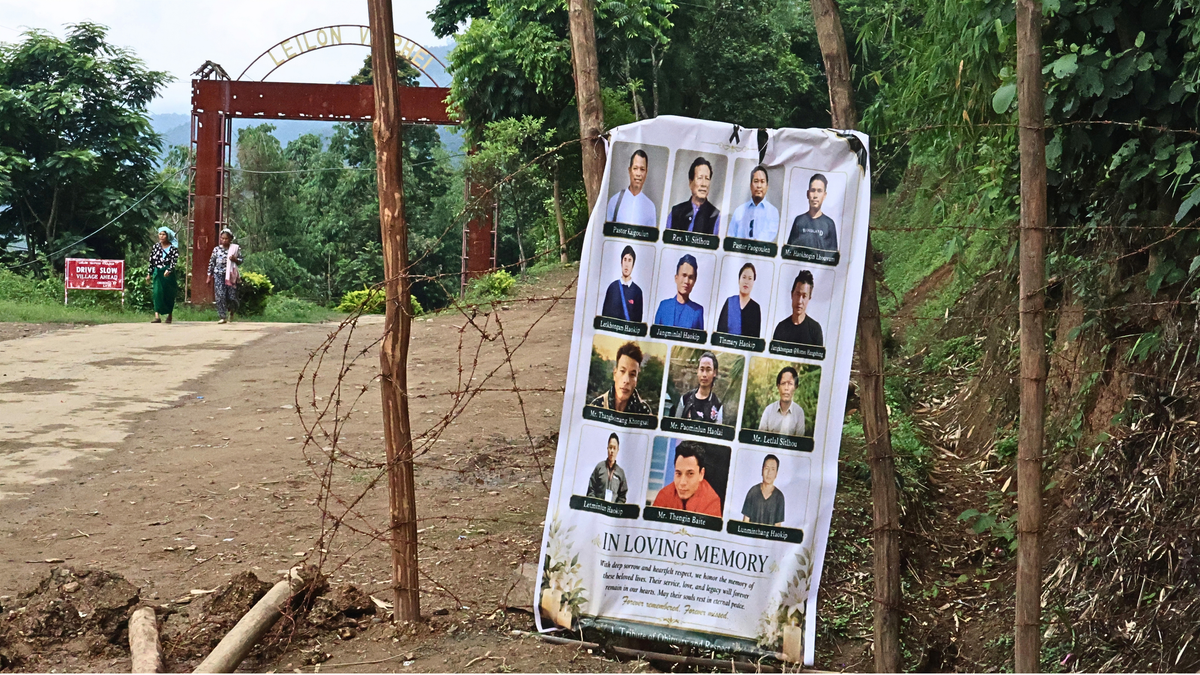
SNAP SOUTHASIA
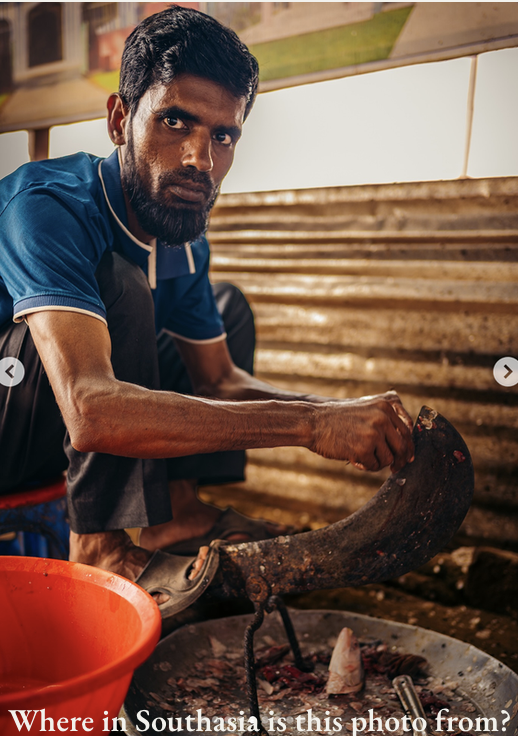
@dorothea_kakava