This Sunday marks World Press Freedom Day, which celebrates press freedom and pays tribute to the journalists who have lost their lives in pursuit of their work. This week, Dileesha Abeysundara writes about the case of Prageeth Ekneligoda, a Sri Lankan cartoonist and columnist who was abducted in 2010. His case is widely known in Sri Lanka as a symbol of the dangerous environment journalists once operated in. For me, it is also personal.
I first met Prageeth’s wife, Sandya in 2015, and was moved to hear about her untiring struggle for answers in her husband’s case. She did not hesitate to highlight the stories of Tamil journalists that did not receive the same attention. I was inspired by her advocacy, especially as someone who has also lost a family member and member of the press to violence. I realised that we had a role to play in bringing the stories of Tamil journalists to a wider audience. At Himal, I’ve been working with media watchdog Free Media Movement to translate some of these stories from Sinhala and Tamil, in the hope to bring them to a wider audience, and also to place them alongside each other to tell the story of impunity around journalist killings in Sri Lanka. As a publication that has stood firm despite overt censorship, we see the value in these stories. We hope you do too, and sign up to our Patrons programme to support our work.
To contribute more and for more information, visit himalmag.com/support-himal.
This week in Himal
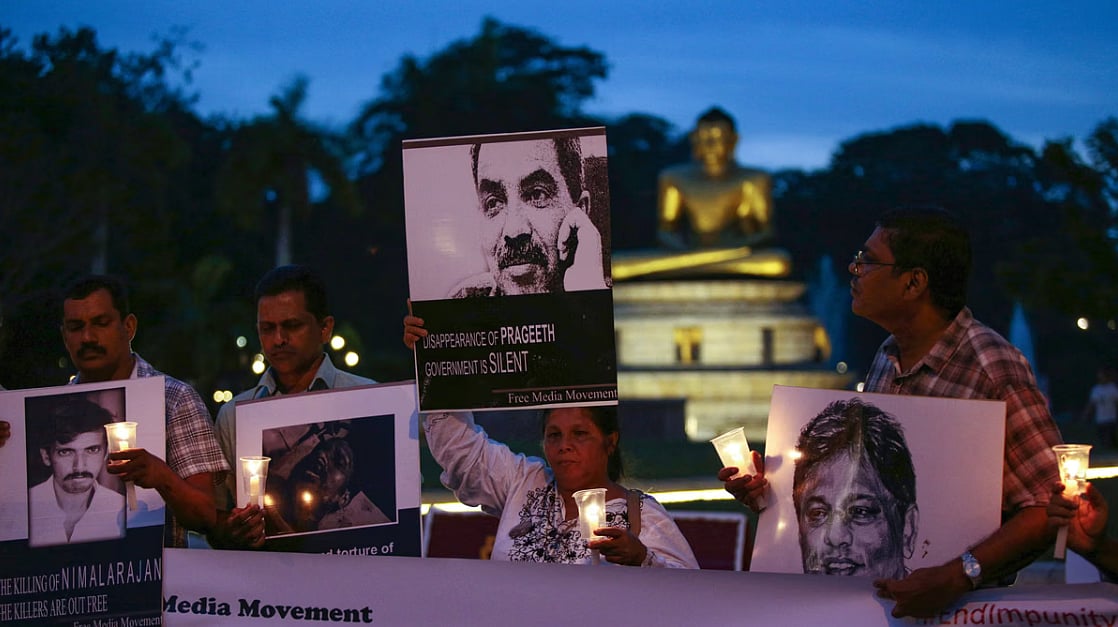
Dileesha Abeysundara writes about impunity and the ongoing fight for justice for the 2010 abduction of Prageeth Ekneligoda, a cartoonist and journalist, with a military intelligence officer implicated in the abduction promoted this January. This story is part of a series in collaboration with the Sri Lankan media watchdog Free Media Movement highlighting attacks on Sri Lankan journalists that languish unresolved.
Shakeel Anwar writes about the shifting power dynamic between India and Bangladesh, with Bangladesh looking for a recalibration after the fall of Sheikh Hasina regime, while India sees the past 18 months of strained ties as merely a temporary disruption.
Tune in to watch ‘Verses on Wheels’ and ‘Tyres’ – this month’s feature for Screen Southasia, our monthly documentary screening. Sign up here.
Also read: The new power dynamic between India and Bangladesh
Also read: Himal Interviews: Wendy Doniger on myth and many Hinduisms
This week in Southasia
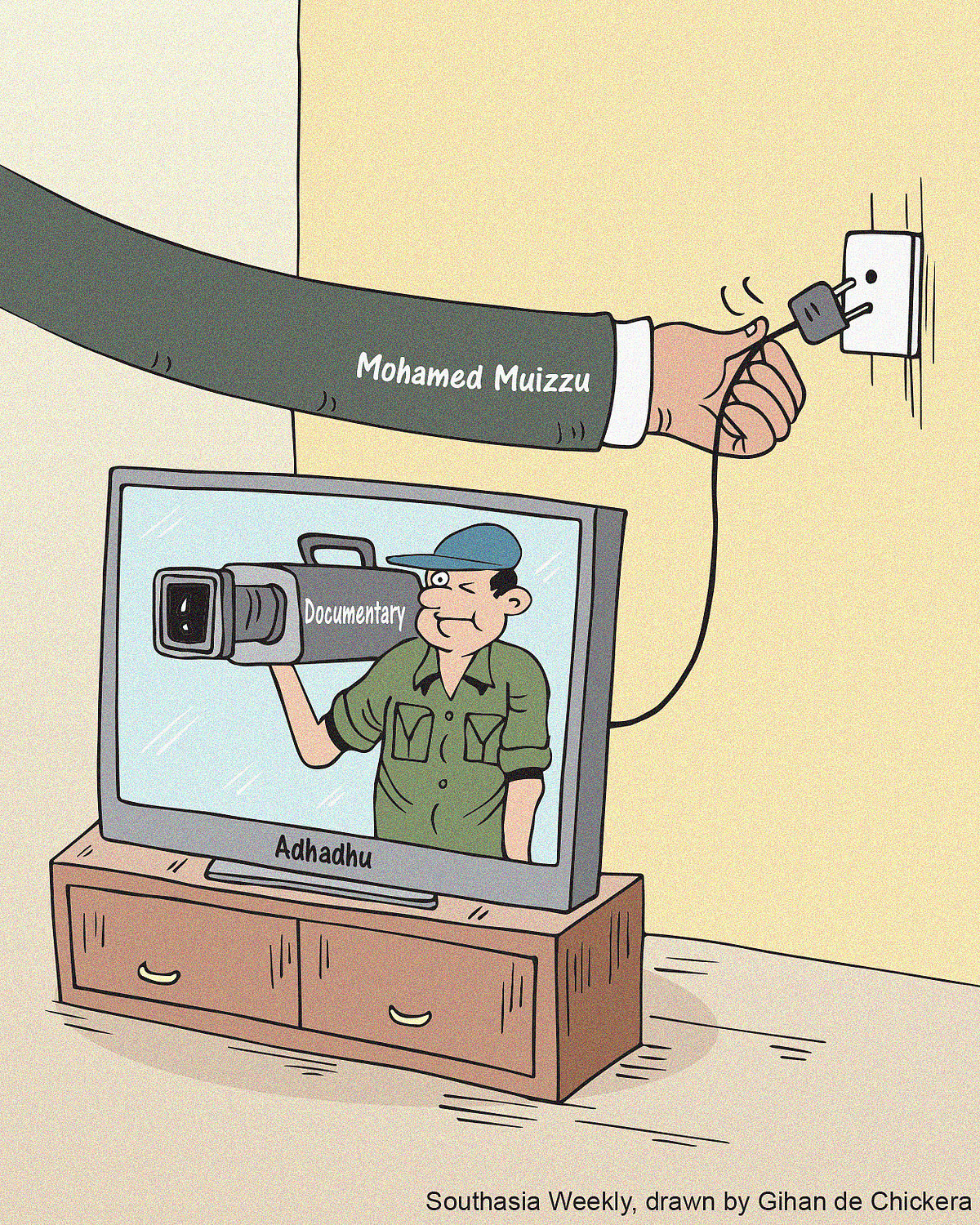
Maldives police raid news outlet after story alleging sexual misconduct involving President Mohamed Muizzu
On 27 April, police raided the offices of the Maldivian news outlet Adhadhu, seizing equipment and imposing travel bans on the CEO and Managing Editor, citing Section 612(a) of the Penal Code which refers to ‘Qazf’ or the false accusation of adultery under Islamic law. The raid came after the release of a documentary by news outlet Adhadhu on 28 March, featuring an interview with a former President’s officer in her twenties, who alleged that she had a sexual relationship with Muizzu lasting more than seven months, after she contacted him in search of a job. According to the Adhadhu story, Muizzu held her hands on the first meeting, and began texting and calling her before offering her a job at the President's Office. The relationship ended after his wife found out, she alleged, and she was transferred to two other government departments during the relationship. A spokesperson from the President’s office dismissed the story as “baseless lies”.
The raid has drawn widespread condemnation from media watchdogs and Maldives’s journalist fraternity and is seen as a crackdown on press freedom in the Maldives (the raid on Adhadhu is the first time that qazf has been cited against a newsroom). Harassment has been directed at Adhadhu journalists, often from social media accounts linked to the ruling People’s National Congress. Less coverage has been given to the allegations themselves. In 2020, editor of the Edition Rae Munavvar wrote about a senior advisor to then president Ibrahim Solih’s unwelcome advances, detailing inaction in her case and highlighting several other cases of misconduct involving Maldives’s legislators. Youth protests in the Maldives recently highlighted a culture of corruption, nepotism and elite immunity which Muizzu and other legislators still have to answer for. Muizzu’s government recently lost a key referendum to hold simultaneous presidential and parliamentary elections, in what was seen as a stinging midterm rebuke to the Muizzu government.

Elsewhere in Southasia:
- Airstrike on Afghan university and residential neighbourhood in eastern province of Kunar leaves seven dead, at least 80 injured, sparking crossborder fire and threatening ceasefire after China-mediated peace talks in first week of April, Pakistan denies targeting university
- Jamia Siraj-ul-Uloom, an important seminary in India-administered Kashmir outlawed under Unlawful Activities Prevention Act after police claim it is tied to banned political party Jamaat-e-Islami
- 20 people convicted in 2018 lynching of two road trippers in Assam after rumours spread that they were ‘child kidnappers’, reflecting similar attacks at the time fuelled by social media misinformation
- Nepali film ‘Lalibazar’ barred from screening after petition filed over portrayal of Badi community, leading to protests over freedom of expression; Nepal’s army warns legal action against people spreading
‘unverified content’ on social media - India and New Zealand finalise free trade deal, New Zealand promises investment of USD 20 billion over 15 years
- Bangladesh commences fuelling first nuclear power plant in Ruppur easing strain on national grid during hot season
- Diasporic Tibetans across 27 countries prepare to elect government-in-exile headquartered in Dharamsala on 2 May
- European Union extends sanctions against Myanmar through 2027 after contested presidential election of former military leader Min Aung Hlaing
- Anant Ambani volunteers to relocate illegally imported “cocaine hippos” from family of drug lord Pablo Escobar to Vantara zoo in India
- Sri Lankan government assumes control of national cricket board as provisionary measure after long-standing accusations of mismanagement
- Nepali government evicts families from river banks, public spaces in Kathmandu without due process, alternative housing provisions, Supreme Court issues show cause order against government authorities
- Sri Lankan government approves interim housing scheme for 1000 families who remain displaced after Cyclone Ditwah
Revisit the below archival stories from Himal adding more context to this week’s news updates from the Maldives, Pakistan, Afghanistan and India
Also read: Youth protests take on the Maldives’s political culture after a woman’s fall
Also read: Pakistan’s narrow view of Afghanistan has cost it dearly
Also read: The costs of Reliance’s wildlife ambitions
Snap Southasia
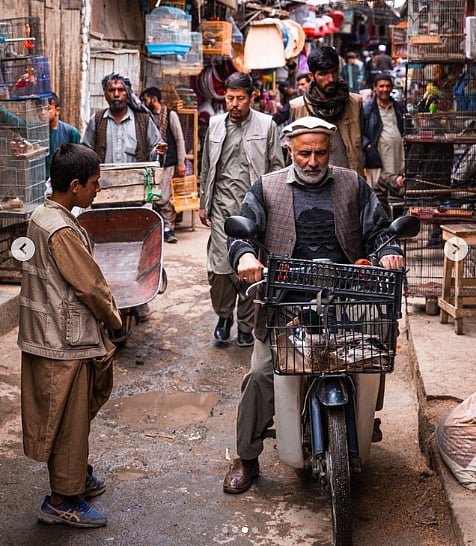
@laurewanders
Where in Southasia is this image from? Click on your guess below (and check in next week to see if you guessed right!)
Saddar Bird Market, Karachi
Ka Faroshi Bird Market, Kabul
Nakkhas Bird Market, Lucknow